Wednesday, December 21, 2016

The tube burst again.

We've been 8 days without agua but there has been no rain.

So, I walk this dog . . .


. . . along this path . . .


.. . . to this cañada . . .


. . . to fill buckets to flush the toilet. (We have, no joke, asked our landlord to install una latrina - an outhouse.)

This little pilgrimage takes me past these modest homes.


This is one of the Haitian enclaves in town.  Here, there is no running water and no electricity. Food is cooked over a fogón -  a "stove" that, lacking a chimney, is basically an indoor campfire. When we signed up for Peace Corps service these are the type of living conditions that I imagined Cat and I would experience, but to be honest, I'm glad we don't. I am grateful for the luz and water - fitful though they might be.

This particular enclave only has two houses. There are other houses much larger. For the most part the Haitian community of our pueblo lives in the old houses where the Dominicans lived before the installation of the concrete houses that give the pueblo it's congnitive-dissonance-inducing suburban appearance.  The enclaves themselves tend to be on foot trails off the main, paved streets.

These homes are often literally behind the homes of Dominicans, like a shadow. This is sadly appropriate. The Haitians make up a good half of the population in town and do more than half of the agricultural labor in town - the type of work that many Dominicans have left (or hope to leave) behind as their increasingly educated children head to university instead of the finca. That is to say, as their society develops.

I have written 30+ entries in this blog and this is my third about water scarcity. I write about it because it is a much bigger part of my life here than I anticipated, because I find it interesting, and, because it helps me process the stress of the experience.

I hope that it doesn't sound like complaining because I know that however challenging this is to me, it is that much harder for the inhabitants of these humble houses.

Friday, December 16, 2016

Small world, small starts

The other day Cat and I woke early to get on the first pickup out of town to head to a community called (in Spanish) "The Cherry Trees". We went there to meet some Chris and Matt of Earth Sangha, the NGO who were the iniciating force behind the tree planting that we participated in not long after we first arrived in site.

I recognize that the phrase "iniciating force" is somewhat awkward, so allow me an explanatory note: I want to give ES the credit they deserve but not all of it. They are essential to the reforestation project of which the planting was a small part - they literally started the project and it is doubtful that this type of project would have (literally) taken root without them - but the vast majority of the work is done on the ground by Dominicans.  The planting we participated in was organized by another Peace Corps volunteer with the help of the local Asociación de Productores del Bosque ("Association of Forest Producers"). There are 3 paid staff here in the DR and the directors of ES only need to visit once or twice a year.


Before heading out to check on the seedlings we planted we sat down with Chris and Matt for a get-to-know you conversation.  Cat recorded some great audio that should be up on the podcast shortly.  Earth Sangha is an interesting organization. Sangha is a Buddhist word that means "collection of things". Originally the word referred to the community of monks who followed the Buddhas but can also be understood to include the community of all living beings. Por lo tanto, the "sangha" in ES includes not just the staff and the members of the association but also the trees themselves and the wildlife that will return to the new forest.

It turns out that Chris, the founder, and I studied under the same Buddhist teacher despite doing so at different decades in different countries and being more than 20 years apart in age. Small world! So how did Chris come to planting trees after studying Buddhism?

After many years working for an organization trying to raise awareness about the dangers of deforestation he wanted to produce more tangible results than just reports. He began with the idea in 1997 and after nearly 10 years of false starts he was able to establish a sustainable project among the Cherry Trees of la República Dominicana. To me, this is an inspiring Buddhist lesson about the importance of persistence in the face of difficulty, whether he thinks of it that way or not. A key Zen teaching is "continue under all circumstances" - never give up. No matter what happens.

And so today the Earth Sangha has led to the reforestation of over 200 acres of hillside in the Cherry Trees. Erosion has been halted, rainwater conserved and pesos injected into the local economy. I am truly impressed by the variety of different programs that ES operates here and in the US. I won't go into all that here since their website does a far better job of that and has better pictures. Check it out and donate some money while you are at it.

So how are the trees doing?

There was some failure but enough have taken hold that a forest will soon stand where now there is only grass.


In Peace Corps we often talk about the long game of sustainable development. Unlike other groups that build buildings or donate goods PC works with the people to introduce ideas and teach techniques that will continue to have impact long after we've left. Volunteers don't get to see that impact while they are in country and may never see it at all. Some volunteers leave country after two years of hard work with the feeling that they have failed.  The metaphor often used is that PC service is like planting trees in whose shade you will never get to sit. I get that - I just never thought it would be so literal!


Sunday, December 4, 2016

Coño y vaina

A toddler called me a c*nt the other day.

I was helping his mother with her English homework and he kept demanding her attention by attempting to destroy things. She and I took turns wrangling him and I think I surprised him with how fuerte I was. When it sank in that I meant business he pointed at me and said: "Coño. Tú."

I am unsure what he meant by that.

Don't get me wrong, I am 100% confident on the translation: tú means "you" and coño refers to that other thing.  Also, I am sure that he knew what he meant. What I am still unsure of is how offensive this word is in Dominican Spanish.

I know that in Mexican Spanish coño is considered pretty vulgar. Years ago, while working in a greenhouse, I asked a Mexicana coworker to pass me the following plant:


In English this is called a "Rabbit's Foot Fern" which would translate to Pata de Conejo, but with my terrible Spanish I asked for a Pata de Coño. The deep discomfort instantly visible on her face told me how much I had embarrassed her, even if it was an accident. Generally speaking, Mexico has a very conservative culture.

They say that you can tell a lot about a culture by it's curse words. Por ejemplo, curses in Castellano (that's what they call Spanish in Spain) feature a lot of Catholic imagery. Given that Spain has gone from the land of the Inquisition to one of the most atheistic countries in Europe I don't think it is a stretch to imagine that phrases "Yo cago en la hostia" ("I sh*t on the communion host") are a reflection of the ambivalent relationship Spaniards have with their Catholic history. 

Some say that the US notion of obscenity, which elevates "f*ck" to the highest level of vulgarity and considers "c*nt" to be borderline hate speech, reflects our culture's unease with sexuality. In other English speaking countries c*nt is considered only mildly vulgar. In Australia and the U.K. calling someone a c*nt is like calling them a jerk. Both those countries have had female prime ministers whereas we can barely muster a female candidate so perhaps it says something about our relationship to female power as well.

The Dominican Republic may be in the Americas but when it comes to coño Dominicans are clearly not Americans.  They use the c-word so often that I won't bother to censor it here.

It's not just that they use it a lot that fascinates me but who gets to say it and in what context. The toddler I told you about was not castigated by his mother and I don't think this is a matter of lax parenting. I have seem campesinos discipline their children for talking back but that same child is allowed to holler coño and drive cattle through the street with a bullwhip. Groups of children shout coño while they play in the street. If a group of my friends and I had been overheard shouting f*ck, c*nt or even "oh hell" someone would have told my parents and I would have been in a world of trouble.

This, of course, would have been a double standard. My parents swore all the time growing up - I learned to talk from them after all - and now that I am an adult I curse in their company without making either of us uncomfortable. I have become one of those millennials that sprinkle sentences with the word "f*ck" like salt over popcorn. I am so comfortable with the f-bomb that I feel a little silly censoring it here. But I do it because I am writing in a professional context. Casual conversation is one thing but you (almost) never say "f*ck" on the job. This double standard is part of my culture and so it makes perfect sense to me.

The rules of Dominican swearing are still unclear. I have mentioned previously the versatility with which Dominicans use coño and at that time I assumed that the word and was roughly equivalent to "f*ck" and that concho (the second most common curse) was more like "goddamn." But now I suspect that there is no easy parallel to be drawn. 

It's not that Dominican campesinos are inherently vulgar people or that the concept of obscenity doesn't exist in the DR. Most Dominicans would never curse God like a Spaniard. Coño, if not exactly obscene, is clearly considered a strong word: the muchacho called me coño because he was mad. My project partner might mutter it under his breath when he can't get the computer to work but we would never say it to a client. You never hear anyone say it on TV.

Another word that interests me is vaina. It's an informal way to refer to an object - like calling something "crap" in English. My deeply Evangelical host mother, who says concho sometimes, won't say vaina. I think that the obvious etymology of the word is what bothers her. Not clear what I'm hinting at? Insert a "g" between the first "a" and the "i."

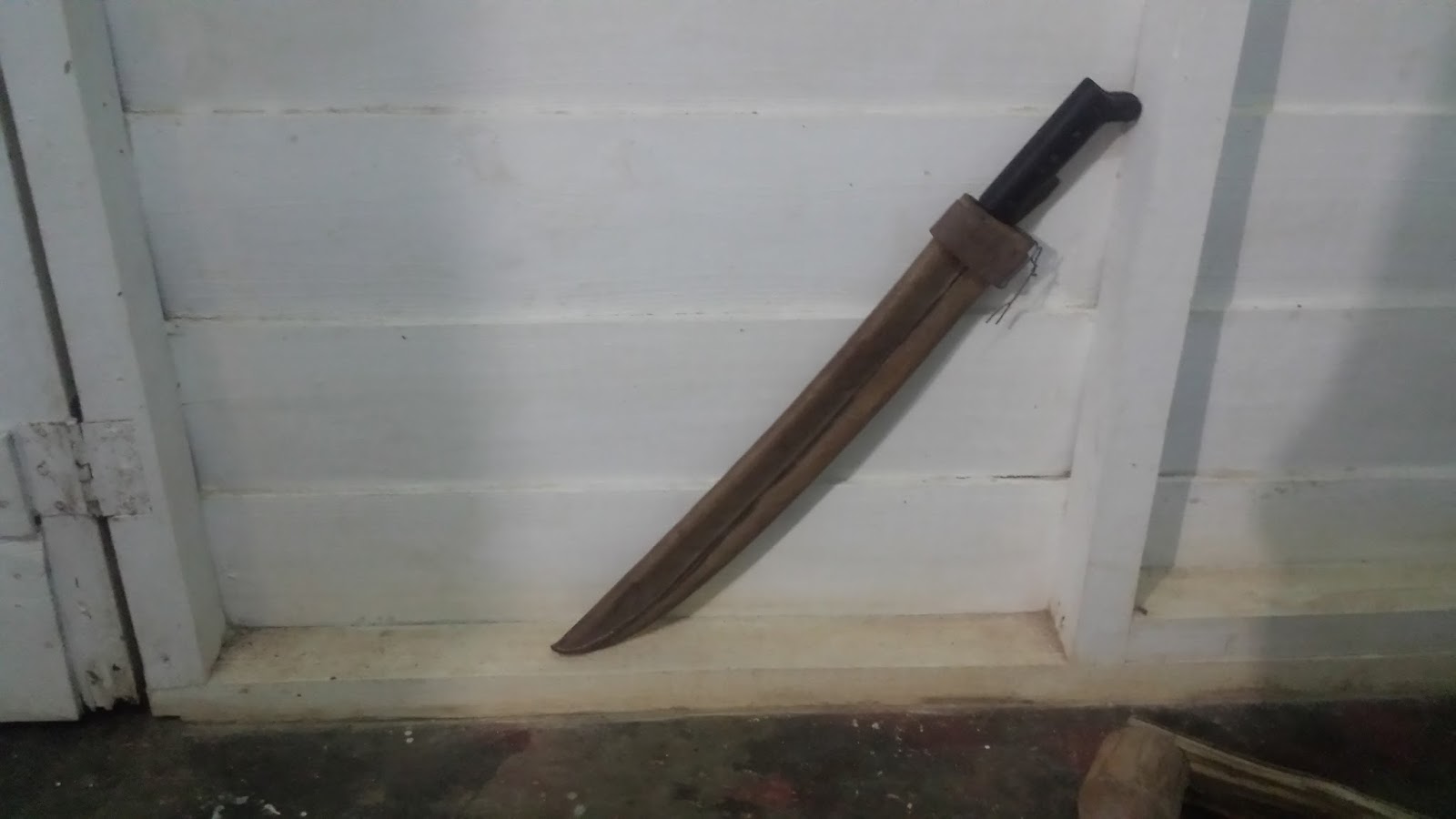
In other Spanish speaking countries "vaina" refers to a sheath. This comes from the Roman Latin "wagina" which referred both to what you put a sword in and the female reproductive organ. My host mother learned her religion from American missionaries and perhaps along with the theology she absorbed some of our discomfort. Non-evangelical Dominicans call the thing I stick my machete in a paqueta ("packet") and call just about everything else a vaina. The word features in the title of some movies.

"¡Qué vaina!"

So what does swearing tell me about DR culture? Coño if I know!

I suppose, if anything, the little sense of what I have made of all of this only reinforces my key perception of campo culture: people are very casual here. Campesinos wear flip flops into city hall and will answer the door in only a towel. In Dominican cities where they produce TV shows and have a professional culture similar to ours people dress for success and use double standards but here in the campo people say what they mean without shame and drive bulls down the streets with whips and blunt words.

Monday, November 21, 2016

In your face


So this happened:


(It happens a lot actually). Pictured is the ruptured tubería that brings agua from a gravity-fed aqueduct to our pueblo. As you may have guessed, we don't have water right now. We haven't for a week, actually, which is the longest dry run since we moved here.

We haven't bathed in the better part of a week and have restricted dish-washing to once a day. Our standard go-to-meal - soup - has been replaced with something less liquid intensive. Thankfully, it is raining. A lot. I have written previously about how we often have less water when it rains due to the peculiarities of the aqueduct but that was in the summer when the rain would knock out the pipe and then promptly disappear. Now, in the tropical winter the rain comes, on average, a couple hours a day. So at least we don't have to hike to the river to replenish our stores. We can collect it more or less directly from the roof.


The dictator that built our house didn't think to include rain-gutters in the design so we need to locate strategic corners.


Each of these buckets holds about 2 gallons of water. We have been using the rainwater to off-set the water we use from our main storage tanks, which we fill from fresh water from the tap. 5 buckets * 2 = 10 gallons, or about 1/4 of one of our storage tanks. What are we doing with all this water, you ask, if we are not cooking, washing, or bathing much?

We`re pouring it directly down the drain.


This jarra is about 4 liters, or one approximately 1 gallon. If we aim it right we can flush with just the jarra but if there's a lot of waste it might require an entire cubo. Or two. In one day, if we are not careful, we can literally flush 10+ gallons of water down the toilet. When things work as they should we can waste this water without thinking. But when things break down you can't lift the lid without the waste being in your face.

When Cat and I first moved to our house we were relieved to see that it had a proper inódoro as opposed to a latrine but now we are considering asking our landlord to install one. There are many houses here that have both. At first I thought this was anachronism but now recognize its utility. In makes sense in the same way that many houses keep their solar panels even though there is luz de la calle. Or how many homes maintain a fogón (wood-fired stove) in a separate outbuilding away in case the gas goes out.

Left: el tanque. Right: la estufa. Center: la goma that makes it all work.

When the gas goes out it is not because of infrastructure fracaso like el agua, or irregularity, like la luz but because there are no gas lines here. To fill your propane tank you pay your friendly neighborhood chofer to load it in the back of his camioneta (pick up truck) and take it to the nearest filling station, located conveniently 2 hours away. His surcharge is reasonable because he know how important it is.

But if you've had a bad harvest, or the market is bad, you just might not be able to afford it. It pays to have back up even if it means la mujer spends the better part of the day tending the fire and inhaling woodsmoke while the muchachos fetch firewood instead of going to school. This contributes to deforestation, of course, but that is a secondary concern to poor, hungry people trying to feed their families.

A few weeks back I wrote about how "suburban" this mountain village sometimes feels, but these superficial similarities hide profound differences.  The differences I speak of here are not just the gap between the level of infrastructural development but also the extra time that this gap adds to everyday tasks and the subsequent psychic toll it takes on individual aspirations.

At a similar house in the US the utilities arrive with such regularity that people literally don't even think about where they come from or at what cost. They are thus free to think of other things: their careers, their children's education, etc. Cat and I talk about a projects a lot but we talk about water even more. We talked about it much less in the United States, despite inhabiting a state in the midst of a five year drought.


We recently baked a birthday cake. We used a special stove-top pan (the oven uses way too much gas) and mixed everything by hand because there were no electric appliances. It took 5 hours. Without a gas-powered dryer and a single chamber washing machine, doing the laundry takes the better part of the day. And this requires the right combination of sunshine, running water, and luz. This doesn't happen every day. We try to plan for it, sometimes even plan our week around it, but if that day finally comes after too many days without our plans change. Instead of going to work, we stay home and wash clothes.

In this context it is obvious why parts of the Dominican Republic are so slow to "develop," why it is so hard to get a parents group going at the school, why people are so reluctant to volunteer for the advisory councils that oversee the savings cooperative. It's not that people in the campo don't care about these things, but like the environment these are secondary concerns. When resources limits are right in your face it can be hard took think about anything else.

Monday, November 14, 2016

Why does the town council own a butcher shop?


The sign below says "Ayuntamiento of the Municipal District of *Town Where I live* Services Open to All."

Ayuntamiento translates exactly to "town council." People use the word to refer to the building, the elected officials therein, the services offered thereby, and the employees who provide them. I've known this word since I talked to the vice-sindico of my CBT pueblo . Despite its flexibility, I was hard pressed to make sense of it in the following context:


In case the blood-red letters in drippy font didn't clue you in carnicería means "butcher shop" and the sign therefore reads: "Town Council Butchery of M.R.L" (¨M" is for Municipalidad and R.L is the initials of the town where I live). This building is right next to the savings cooperative where I work everyday. I can see it through the window near my desk.

Despite this familiarity, or perhaps because of it, I haven't given much thought to what it is or what goes on there. Like I wrote in my last entry, the first six months in site have been intense. When I'm overwhelmed I tend to either shut down or open up all the way, so I ended up accepting a lot of things without much investigation. Sometimes it's best to just file things under "that's weird" and move on with your day.

Last week, I saw a handwritten sign that I lamentably neglected to take a photo of. It was posted on a street corner and declared in the formal language of Dominican government announcements that the ayuntamiento would be holding a subasta for municipal service providers and that anyone was welcome to attend.

After 8 months in country, my written Spanish is pretty good. I can read the paper (without a dictionary) and contemporary novels (with one). I can write a professional email. I can write poetry. My spoken Spanish it pretty good, too, though it varies depending on context. If you are a complete stranger with a thick country accent, talking about something I am not familiar with, I might only get 60% of what you are saying. If you are an educated, urban stranger I probably bat about 80% and my average goes up when I tune into your particular way of talking. When conversing with someone I know well about a topic where I know all the vocabulary, I can sometimes communicate with 100% fluidity. On a good day, I go to sleep feeling like I speak Spanish.

That day, I was feeling confident: I understood all the words on the sign except for subasta. I looked it up in the dictionary: it means "auction." What municipal services was the town council going to auction? I was intrigued. I also felt guilty for never before having attended a meeting of the ayuntamiento. It seemed like a basic background thing that I had neglected for too long. I decided to attend.

In a small town everyone knows everyone, so even though I've only lived here half a year I recognized half the people in the room.  Some were you usual movers-and-shakers whose presence was to be expected. The presence of some of the others might have been surprising if I knew what the heck was going on. There were some greetings and smiles of recognition.  I don't know if you can tell from the photo, but the building is the exact same vintage as my house and has an identical floor plan.  The meeting took place in the "kitchen." Imagine, if you will, 30+ people in the following space.

Cluttered kitchen table included for scale.

I took a seat and the meeting began. That 60% to 100% I just bragged about? That only happens in a one-on-one context where I am able to ask follow-up questions of polite people who are concerned about whether or not I understand what the heck was going on.

Gracias a Dios, the form of the meeting was identical to municipal meetings I have attended in the US. There was an agenda and a secretary to read it. But the main agenda item, the subasta felt like, well, an auction, and not a silent one. With everybody talking at once my comprehension dropped to about 25%. But one thing was clear: the ayuntamiento was auctioning off the rights to the carnicería that bears it's name.  Only on my walk home did I have presence of mind to wonder, why the heck does a city council own a butcher shop in the first place?

That night, I did not go to sleep feeling like I spoke Spanish.

The next day, I talked it over with Mariano, a community leader who also happens to be one of my favorite people in town. He has lived in the pueblo all his life and has watched it grow from a group of dozen a families to a small town of 2000+. He has been instrumental in that growth, having been involved in just about every community project over the years. He serves on the comite de crédito (credit commission) of my savings cooperative and had been at the subasta the previous night. He has a lifetime of experience that he is eager to share and is kind and patient with my uneven Spanish. He is concerned about whether or not I understand what the heck is going on.

He explained to me that in a small country like the DR it makes sense to organize services like roads, schools and police at a provincial, or even national level. As such, Dominican municipal governments have very few excuses to few taxes on their citizens which means they sometimes have little revenue. By owning, and auctioning the rights to, services like the butcher's shop the ayuntamiento can simultaneously guarantee a source of revenue for itself while also guaranteeing that these services exist in their town. What is more, the ayuntamiento sets a maximum price per pound at the carniceria to ensure that the meat is affordable to its citizens. In a town with serious hunger in living memory that makes a lot of sense.

It's an interesting way of doing business, and governance, that I am happy to have learned about. I'll probably attend more meetings of the ayuntamiento in the future and record my reflections on other interesting stuff here.

Monday, November 7, 2016

Buen provecho, buen tiempo

When you see someone eating in the DR it is customary to wish them "Buen provecho," which more or less translates to "Bon appetit." This is a ritualized greeting. You say it like you say "salud" (health) when someone sneezes. This is more common in the campo than in the city, which leads me to believe it is an older custom.

You are especially obliged to say "buen provecho" if someone sees you see them eating and first wishes you "A buen tiempo." Not responding to "a buen tiempo" with "buen provecho" is straight up rude, like not saying "You're welcome" when someone thanks you.

Confused? Allow me to translate.

A buen tiempo means literally "A good time."

Buen provecho means literally "good advantage" or "good benefit."

Still confused? Don't feel bad. This custom continued to mystify Cat and I long after we had adopted it ourselves. I recall clearly a visit not long after we arrived in site while we were making our initial introductions to the community. We entered a house to find an older man eating who was quick to wish us a buen tiempo. Seconds ticked by painfully and his smile turned to a frown. He stared at us impatiently as if we were holding him up. "Buen provecho," he prompted us. Only Cat stammered "buen provecho" did he return to eating, clearly annoyed at our maleducación.

Later, at home we attemped to process the incident together.

"What the hell was that about?"

"I don't know!"

We imagined the encounter in English.

"Good times over here!"

"Well, good on you for taking advantage of it!"

Guandules, pigeon peas. ¡Good times!

What kind of person, when eating, looks at a stranger who is clearly not eating and not only brags about what a good time they are having but also gets mad when the possibly hungry person doesn't congratulate them? It seemed uncouth. Especially since Dominicans in the campo are normally so polite and generous.

Maybe it was a hunger thing. The people in our pueblo are mostly well-fed but real hunger, as in not having enough food, persists within living memory. Or maybe it was sarcastic?

"Check it out! I'm eating!"

"Good for you, daddy-o!"

Whatever. The first days, weeks, months, were intense and overwhelming. We accepted this bizarre custom like we accepted the fact that people dip bread in their hot chocolate and call that dinner. Culture is just weird sometimes. It can't be helped. It's like in English how the correct answer to "How are you?" is "I'm fine," regardless of how you really feel.  What's truly weird is not to play along.

Well, after 8 months in country and 6 months in site we have finally figured it out. We now have friends with enough confianza that we can ask delicate questions and our Spanish has advanced to the point that we can understand the nuance of their answers. So we asked. (Cat did).

It turns out that we had all the pieces of the puzzle but had just put them together in the wrong order. Yes, Dominicans are generous and polite. Yes, real hunger is a thing here. Yes, it is important to wish someone "a good advantage" when they are eating, especially if they first tell you what a good time they are having.

Because A buen tiempo is not a brag.  It's an invitation to dine.  As in, "Come share this good time with me." And when you wish them buen provecho you are saying "No, I'll be happier if you to take advantage of that." It's a mutual expression of care. Beyond polite, this is generous. And it means so much more in a society where hunger is still a thing.

So now when I greet my rounds and saludar my neighbors I always respond to their "buen tiempo" with "buen provecho." That is, if I don't beat them to it first!

Monday, October 31, 2016

Morbid poetry for Halloween!

Yo quiero un mapa
de viaje inesperada,
del tipo que fanteseaba
cuando era optimista.

Las fronteras rodearán
un espacio puro blanco,
o sea, vacio, como sueños
que se quedan no deseados.

Cuando trece yo tenía
todas cosas yo merecían.
Y todo descubriá
por la fuerza de fantasia.

Pero ahora con edad
me alegría tener solo
visión no prevista.
No me importa el lugar.

Cuando me muera,
solo debajo la tierra
sin guía ni pareja y
andaré nunca más.

No me importa adónde
mis huesos  estarán
mientras los gusanos comen
un cerebro bien viajado.

---------

I want a map
of an unanticipated journey,
the kind I used to fantasize about
back when I was optimistic.

The borders will surround
a blank white space,
that is to say, empty,
like dreams that stay unwanted.

When I was thirteen
I deserved everything.
And I discovered everything 
through the force of fantasy. 

 But now that I am older,
the only thing that would please me
would be an unforeseen vision.
The location doesn't matter to me.

When I die
I will leave the earth on my own,
without guide or partner, and 
I will wander nevermore. 

It matters not to me
where my bones end up
so long as the worms can eat
of a well-traveled brain.