Sunday, January 29, 2017

5 things that make me hopeful for my community

Obligatory Preferatory Paragraph

I think in paragraphs. I sometimes speak in them - much to the annoyance of Cat - and I write in them as well.  To embrace this Blog Challenge as an actual incentive to try something new instead of just indulging in my old habits, I've opted to write this entry as a listicle.

1. Good relations between Dominicans and Haitians

Unlike the rest of Latin America, the DR celebrated it's independence not from Spain but from it's neighboring nation. Things have been pretty tense between the two cultures since that time. So I am especially grateful to see the Dominicans in my community treating Haitian immigrants with a respect and decency that its not universally common across the nation.

2. Multi-generational environmental awareness


While deforestation is exactly improving fast enough, there is a wide-spread awareness of the problem. The old hands know it firsthand from comparing the paisaje ("landscape") of their youth to the bald hills of today, and they have instilled this knowledge in their children. The local national park was declared in 1995 and the local technical high school teaches conservation.


 Mural on the side of a local store
 
3. Conservation of cultural

When cheap digital cameras came to the pueblo in the form of cell phones, what is the first thing the jóvenes (youth) did? Well, after they got on WhatsApp. they made a movie telling the story of a local Don and Doña. Two, actually!

The first, Una Boda de Oro, focused on their courtship and marriage.  Cat and I are very proud to have arranged a local that featured this film.


A second chapter, Teofilo Mora 1966 which premiered Wednesday night at the local community center, tells the rest of the story.

They have be abandoning the old ways in the city, but here in the capital, the young people still young ones can play the traditional music and still dance the traditional dances no matter how much time they spend chateando.


4. Steady arrival of modern convenience

30 years ago this village was all wooden shacks.  They had neither running water, electricity or telephones. Now, it has suburban style houses with all the essential services (however imperfectly implemented) - plus internet. Hopefully this comfort and convenience in the campo will make the capital and points further afield less alluring and thus slow the brain drain. 
 
¨What a difference 300 feet of steel makes"

5. Religious diversity and tolerance

Two generations ago, the pueblo was mono-culturally Catholic. Now it has multiple, well-established Evangelical congregations and a thriving Salon de Reinos (Kingdom Hall) for the local Jehovah's Witnesses. I am officially fine with Catholicism but am a fan of religious diversity because new ways of worship often means new ideas. 

Like ethnic inclusion, religious tolerance better prepares a society (however small) to whether the changes in a rapidly evolving world. Unsurprisingly, the members of these minority religions have a major religion in the local culture. Los evangélicos and los Testigos are well-represented in non-religious leadership positions around town.

CHALLENGE FAIL
OK, so my bullet points turned out to be paragraphs. At least I tried. Thinking positive, especially as I emerge from a mild holiday induced depression, was challenging enough.


This post is part of Blogging Abroad's 2017 New Years Blog Challenge, week four: Change and Hope. My final one actually! I hope you've enjoyed the more regular posting schedule. I'll be taking next week off. If you want something to read in that absence give the other bloggers participating in this challenge a try.

Thursday, January 26, 2017

Drowning in Water

The Meaning of Water

A favorite parable of mine goes like this:

Two young fish are swimming along side-by-side talking about the things youngs fish talk about when an elder fish says to them in passing:
 

"'Morning fellows! How's the water today?"

The young wish swim on without reply. Only When the strange, old fish has safely passed does one turn to the other and say: 


"What the heck is water?"

Culture is like water. We swim in it without knowing it for what it is. We take it for granted.

(For a more extensive exploration of this idea, I recommend the following commencement speech by David Foster Wallace.)


This parable has been helpful to give me perspective on my own culture. To be more see more of the thins that I take for granted. when I lived inside my own culture.

Lately, though this has metaphor has taken on a whole new  dimension of meaning.


A Very Bulla Christmas

The holidays were hard for me. (Cat, too). I would have been hard pressed to explain it at the time but with the wisdom of a few weeks perspective I can see it was a matter of cultural difference.

Being out of my own culture meant swimming in unfamiliar waters. The winter holidays in the DR are just different and that made me uncomfortable and a bit depressed in a way I wasn't anticipating.

So, you ask, how are they different?


These lights on a neighbor's house are one on a short of five items that DR and US Christmas celebrations have in common. The others? Family comes home, people take a week or more days off work, they celebrate with food and drink, and the special day gets special recognition in the church.
(We were invited to Mass but we didn't go. I now wish we had - the familiarity might have been grounding for me.)

Gift giving? That's really only for kids here and it's done on the el Día de los Tres Reyes, which is January 6. In the Hispanic tradition the Three Kings give the gifts instead of the Germanic, quasi-pagan figure of Santa Clause.

Christmas trees are a bit too nothertn, too. There's been some adoption of "l arbolito in the cities but here in the campo with a significant deforestation problem "holiday cheer" is not a good enough reason to cut down a perfectly good tree.

Christmas music? The two or three songs I heard para la Navidad (yes, one of them was by Jose Feliciano) were Mexican imports.  These were far outnumbered by the secular bachata, merengue, salsa and dembow tunes. These I heard all night, every night, from la Noche Buena (Christmas Eve) through la Noche Vieja (New Year's Eve).

The Spanish word for this - used with pride by some locals - is bulla which translates as "racket." This is, of course, directly contrary to the Christmas traditions of Northern Europe and the Northern America. Underneath all the crass commercialism, Christmas in the United States is still a spiritual and introspective time. You stay in because it's cold. You spend time with your family. You try to be nice in a way that you aren't normally.

The folks in my campo mostly use la Navidad as an excuse to get together with people  they don't normally see and hacer la fiesta.  They drink and dance in la discoteca. Because Christmas just isn't that big a deal here.

What is a big deal is Semana Santa (Holy Week), the last week of Lent before Easter. I'd love to write about it's role in Dominican culture but that will have to wait until I've actually experience it.


It all makes sense in perspective. I come from a society that is Protestant Christian at it's core at it's core while Dominican roots are distinctly Catholic. The water felt wrong, so it was hard for me to go with the flow.

I wonder how Dominican immigrants to the US feel in to find themselves in a society where their biggest cultural event isn't celebrated outside of a few ethnic enclaves? I imagine that the first Semana Santa they spend away from home passes not so - how, shall I put it? - swimmingly.

This post is part of Blogging Abroad's 2017 New Years Blog Challenge, week three: Cultural Differences.

Sunday, January 15, 2017

Dominicans and Haitians: More than just "A Single Story"

A Single Story

Before coming to the DR I read about it's history, which meant I read about it's relationship with Haiti. I read about the 1937 "Parsley Massacre" (link). I read about the recent change in law that stripped many Haitian-Dominicans of their citizenship, rendering them effectively stateless. I read about the "colorism" of the DR that prizes light skin above dark, Spanish ancestry above African: a scale that places Haitians at the bottom. I read about the history of the importation and concentration of Haitian laborers in bateys - temporary labor camps that have become permanent fixtures.

I am writing this entry in response to a prompt from the blog challenge to reflect on "The Dangers of a Single Story." The phrase comes from this TED talk by the Nigerian author Chimananda Ngozi Adichie.


We watched it during PC training. If you haven't (you should - it's good) here's the gist: looking at other people from a single perspective is not only dehumanizing it also provides bad data. It limits your chance to participate in the world.

I came here with a pre-packaged "single story" on racism in the DR. I came here expecting a through-and-through racist society, a place of systemic oppression and universal, brutal discrimination. What I found is much more complex.

Cognitive Dissonance
During training our host mom surprised me by comparing the experience of Haitians in the Dominican Republic to the experience of Dominicans in the  United States. "They come here for a better life for themselves and their children, to make money to send back home. They work very, very hard."

This surprised me. At the time, I attributed it to her unique, individual progressiveness. She's a wonderful woman but I am happy to report she's not that unique. I have since heard this sentiment echoed by many other Dominicans.

When I received my project folder last May that it described my host community as being half split between a long standing Dominican population and recent Haitian immigrants. Since we are within walking distance of the border, the vast majority of these immigrants are undocumented.

I braced myself for ugliness but I arrived to find a community where Haitians and Dominicans live side-by-side with almost no conflict. Where their children go to school together and play in the streets. Where, yes, Haitians work for Dominicans (not the other way around) but where it is not uncommon to see them relax together afterwards. Where they pray together in the same churches.  Where, occasionally, they intermarry.

I took a Kreyol class because I expected to need it to communicate with half of my neighbors only to find they speak better Spanish than I do.

When a Haitian immigrant recently packed up their things and to head back across the border, I saw as many Dominicans bid them farewell as Haitians.


In training, we were told that volunteers of "visible African descent" (a politely bureaucratic way of saying "dark-skinned") should always carry their passport when traveling in the border region in case they were stopped by border patrol guards who might mistake them for Haitian. I have seen Haitians taken off the bus at military check points, but have been asked for my own papers as well.

Other Stories
I started comparing notes with other volunteers. One told me that a Dominican community member in their site described member Haitians as "our brother and sisters." Another volunteer described the racist language that he heard in his site, the terrible things he heard Dominicans say about Haitians. They were exactly the kind of thing I expected to hear everywhere but have never heard in my site.

"Do they treat them badly?" I asked.

"There's not really any Haitians in my site," he explained.

For the New Year, Cat and I visited a volunteer who lives in a batey. To walk around the impoverished conditions was humbling. They were far worse than in my site. The batey - a mere 35 km from the second largest city in the country - is about 90% Haitian. The Dominicans who comprise the remaining 10% live in houses while most of the Haitians live in buildings that used to be barracks for laborers.


With my experience in the border - hours closer to Haiti than the batey - I expected to find Haitians speaking Spanish, eager to integrate. Instead, I was told by our host (she speaks Kreyol; I still don't) that the residents see themselves as wholly Haitian. Even those that have their citizenship explicitly choose not to identify as Dominican or even Haitian Dominican. Even after 3 generations, they still don't teach their kids Spanish.

A Question is the Opposite of a Story
I would love to draw some kind of conclusion from all of this, to say that desptire my worst expectations I did not find the DR to be a society with systemic racism (I did) or that the border region is some kind of unique oasis free of discrimination (it's not). I would love to have explain (to myself if no one else) the surprising attitudes of the Haitian residents in the batey so deep in the heart of la República. But I can't.

This is probably for the best. If I did these things, they would just be more stories I tell myself. While many stories would surely be better than just one I think I'll opt instead to listen.

 This post is part of Blogging Abroad's 2017 New Years Blog Challenge, week two: The Danger of a Single Story.

Sunday, January 8, 2017

How Wooden Spoons Made a Global Citizen Out of a Campesino

#DominicanosAusente

During the holidays the hashtag #DominicanoAusente ("Absent Dominican") trended on Twitter. It was por y para (by and for) Dominicans living abroad who missed home. They posted pics of food  they missed and links to songs that reminded them of home. There are about 1 million Dominican citizens (9% of the population!) that live outside of la República.

Famously, many Dominicans move to "Nueba Yol" (New York) - a term that has lately come to include the entire east coast of the United States from Boston to Miami. So-called "South-South" migration is also more and more common. Dominicans go to Panama, to Peru, to Chile; places where the language, culture and climate are more similar and the exchange rate is increasingly favorable.

For some reason our little mountain pueblo has attracted the attention of many European development organizations. For that reason when my neighbors think of a rich, cold place where they can work hard and send something back home they are more likely to dream of Berlin than Manhattan. They go to Germany, Belgium, Sweden, Finland. 

They come home for the holidays in rented cars. They come bearing gifts: new cell phones, the latest fashions. But many can't afford the trip. Hence the hashtag.

Any of these emigrants could be considered global citizens but today I will write of only one.


Wooden Spoons

Cat and I are not the first Peace Corps volunteers to live in our house. Before the previous volunteer returned to the US she offered to put us in touch with her landlord. Being unfamiliar with the unique history of the town, I was surprised to learn that he lived in Sweden. When he and I got on the phone a short time later I was surprised to learn that he was an artist. His name is Rivera. His medium is wood.

As a child, Rivera was always fascinated by art but didn't have an outlet until he was a teenager, when he was introduced to his craft by one of the quirkier European aid organizations.  He started carving spoons from pino.  He carved snakes from orange trees. He wrought rings from avocado wood. He only worked with dead wood because he understands the problem of deforestation.


He began selling his obras at craft fairs in the capital. Piece by piece, he started making money. He was able to build a workshop in town. He was able to buy a house - ours. He began to travel.

He made his way not through hustling wooden spoons but through social connections. Talented and naturally gregarious,  Rivera has been able to turn mere customers into lasting friendships. And these friendships have helped him see the world beyond Hispaniola. More than once a friend paid for his plane ticket and he paid them back in honest labor. He painted apartments. He worked in construction.

He went to California, Oregon, and Montana. Canada. Germany. He picked up the local language. He always had a place to stay. He stayed in places long enough to absorb not only what makes them beautiful but to pick up on their problems. When he first visited Washington, DC he toured the entire city, including its most disadvantaged areas. So when we discuss racial tensions between Dominicans and Haitians he is able to knowledgeably compare it to racism in the US.

Dominicano Presente

Rivera has settled in Sweden with his partner and their children but maintains a living connection with the pueblo. He does the due diligence of any local boy made good: part of our rent is paid directly en efectivo to his elderly parents, who live across the street from us. But in addition to taking care of the family he is also interested in doing his part to take care of his home town.

While most of the ex-patriated Dominicans that filled up the pueblo during the holidays have already headed back across the pond, Rivera plans to stay on for a few more months to work. He will be putting in lots of hours at his studio but also improving some of the other properties he owns in town.

He also hopes to put the finishing touches on a cabin that he hopes to rent to ecotourists who come to take in the natural beauty that surround the pueblo. Part of the vista that they will take in is land that he owns - and keeps as virgin forest.

This post is part of Blogging Abroad's 2017 New Years Blog Challenge, week one: Global Citizenship.

Wednesday, December 21, 2016

The tube burst again.

We've been 8 days without agua but there has been no rain.

So, I walk this dog . . .


. . . along this path . . .


.. . . to this cañada . . .


. . . to fill buckets to flush the toilet. (We have, no joke, asked our landlord to install una latrina - an outhouse.)

This little pilgrimage takes me past these modest homes.


This is one of the Haitian enclaves in town.  Here, there is no running water and no electricity. Food is cooked over a fogón -  a "stove" that, lacking a chimney, is basically an indoor campfire. When we signed up for Peace Corps service these are the type of living conditions that I imagined Cat and I would experience, but to be honest, I'm glad we don't. I am grateful for the luz and water - fitful though they might be.

This particular enclave only has two houses. There are other houses much larger. For the most part the Haitian community of our pueblo lives in the old houses where the Dominicans lived before the installation of the concrete houses that give the pueblo it's congnitive-dissonance-inducing suburban appearance.  The enclaves themselves tend to be on foot trails off the main, paved streets.

These homes are often literally behind the homes of Dominicans, like a shadow. This is sadly appropriate. The Haitians make up a good half of the population in town and do more than half of the agricultural labor in town - the type of work that many Dominicans have left (or hope to leave) behind as their increasingly educated children head to university instead of the finca. That is to say, as their society develops.

I have written 30+ entries in this blog and this is my third about water scarcity. I write about it because it is a much bigger part of my life here than I anticipated, because I find it interesting, and, because it helps me process the stress of the experience.

I hope that it doesn't sound like complaining because I know that however challenging this is to me, it is that much harder for the inhabitants of these humble houses.

Friday, December 16, 2016

Small world, small starts

The other day Cat and I woke early to get on the first pickup out of town to head to a community called (in Spanish) "The Cherry Trees". We went there to meet some Chris and Matt of Earth Sangha, the NGO who were the iniciating force behind the tree planting that we participated in not long after we first arrived in site.

I recognize that the phrase "iniciating force" is somewhat awkward, so allow me an explanatory note: I want to give ES the credit they deserve but not all of it. They are essential to the reforestation project of which the planting was a small part - they literally started the project and it is doubtful that this type of project would have (literally) taken root without them - but the vast majority of the work is done on the ground by Dominicans.  The planting we participated in was organized by another Peace Corps volunteer with the help of the local Asociación de Productores del Bosque ("Association of Forest Producers"). There are 3 paid staff here in the DR and the directors of ES only need to visit once or twice a year.


Before heading out to check on the seedlings we planted we sat down with Chris and Matt for a get-to-know you conversation.  Cat recorded some great audio that should be up on the podcast shortly.  Earth Sangha is an interesting organization. Sangha is a Buddhist word that means "collection of things". Originally the word referred to the community of monks who followed the Buddhas but can also be understood to include the community of all living beings. Por lo tanto, the "sangha" in ES includes not just the staff and the members of the association but also the trees themselves and the wildlife that will return to the new forest.

It turns out that Chris, the founder, and I studied under the same Buddhist teacher despite doing so at different decades in different countries and being more than 20 years apart in age. Small world! So how did Chris come to planting trees after studying Buddhism?

After many years working for an organization trying to raise awareness about the dangers of deforestation he wanted to produce more tangible results than just reports. He began with the idea in 1997 and after nearly 10 years of false starts he was able to establish a sustainable project among the Cherry Trees of la República Dominicana. To me, this is an inspiring Buddhist lesson about the importance of persistence in the face of difficulty, whether he thinks of it that way or not. A key Zen teaching is "continue under all circumstances" - never give up. No matter what happens.

And so today the Earth Sangha has led to the reforestation of over 200 acres of hillside in the Cherry Trees. Erosion has been halted, rainwater conserved and pesos injected into the local economy. I am truly impressed by the variety of different programs that ES operates here and in the US. I won't go into all that here since their website does a far better job of that and has better pictures. Check it out and donate some money while you are at it.

So how are the trees doing?

There was some failure but enough have taken hold that a forest will soon stand where now there is only grass.


In Peace Corps we often talk about the long game of sustainable development. Unlike other groups that build buildings or donate goods PC works with the people to introduce ideas and teach techniques that will continue to have impact long after we've left. Volunteers don't get to see that impact while they are in country and may never see it at all. Some volunteers leave country after two years of hard work with the feeling that they have failed.  The metaphor often used is that PC service is like planting trees in whose shade you will never get to sit. I get that - I just never thought it would be so literal!


Sunday, December 4, 2016

Coño y vaina

A toddler called me a c*nt the other day.

I was helping his mother with her English homework and he kept demanding her attention by attempting to destroy things. She and I took turns wrangling him and I think I surprised him with how fuerte I was. When it sank in that I meant business he pointed at me and said: "Coño. Tú."

I am unsure what he meant by that.

Don't get me wrong, I am 100% confident on the translation: tú means "you" and coño refers to that other thing.  Also, I am sure that he knew what he meant. What I am still unsure of is how offensive this word is in Dominican Spanish.

I know that in Mexican Spanish coño is considered pretty vulgar. Years ago, while working in a greenhouse, I asked a Mexicana coworker to pass me the following plant:


In English this is called a "Rabbit's Foot Fern" which would translate to Pata de Conejo, but with my terrible Spanish I asked for a Pata de Coño. The deep discomfort instantly visible on her face told me how much I had embarrassed her, even if it was an accident. Generally speaking, Mexico has a very conservative culture.

They say that you can tell a lot about a culture by it's curse words. Por ejemplo, curses in Castellano (that's what they call Spanish in Spain) feature a lot of Catholic imagery. Given that Spain has gone from the land of the Inquisition to one of the most atheistic countries in Europe I don't think it is a stretch to imagine that phrases "Yo cago en la hostia" ("I sh*t on the communion host") are a reflection of the ambivalent relationship Spaniards have with their Catholic history. 

Some say that the US notion of obscenity, which elevates "f*ck" to the highest level of vulgarity and considers "c*nt" to be borderline hate speech, reflects our culture's unease with sexuality. In other English speaking countries c*nt is considered only mildly vulgar. In Australia and the U.K. calling someone a c*nt is like calling them a jerk. Both those countries have had female prime ministers whereas we can barely muster a female candidate so perhaps it says something about our relationship to female power as well.

The Dominican Republic may be in the Americas but when it comes to coño Dominicans are clearly not Americans.  They use the c-word so often that I won't bother to censor it here.

It's not just that they use it a lot that fascinates me but who gets to say it and in what context. The toddler I told you about was not castigated by his mother and I don't think this is a matter of lax parenting. I have seem campesinos discipline their children for talking back but that same child is allowed to holler coño and drive cattle through the street with a bullwhip. Groups of children shout coño while they play in the street. If a group of my friends and I had been overheard shouting f*ck, c*nt or even "oh hell" someone would have told my parents and I would have been in a world of trouble.

This, of course, would have been a double standard. My parents swore all the time growing up - I learned to talk from them after all - and now that I am an adult I curse in their company without making either of us uncomfortable. I have become one of those millennials that sprinkle sentences with the word "f*ck" like salt over popcorn. I am so comfortable with the f-bomb that I feel a little silly censoring it here. But I do it because I am writing in a professional context. Casual conversation is one thing but you (almost) never say "f*ck" on the job. This double standard is part of my culture and so it makes perfect sense to me.

The rules of Dominican swearing are still unclear. I have mentioned previously the versatility with which Dominicans use coño and at that time I assumed that the word and was roughly equivalent to "f*ck" and that concho (the second most common curse) was more like "goddamn." But now I suspect that there is no easy parallel to be drawn. 

It's not that Dominican campesinos are inherently vulgar people or that the concept of obscenity doesn't exist in the DR. Most Dominicans would never curse God like a Spaniard. Coño, if not exactly obscene, is clearly considered a strong word: the muchacho called me coño because he was mad. My project partner might mutter it under his breath when he can't get the computer to work but we would never say it to a client. You never hear anyone say it on TV.

Another word that interests me is vaina. It's an informal way to refer to an object - like calling something "crap" in English. My deeply Evangelical host mother, who says concho sometimes, won't say vaina. I think that the obvious etymology of the word is what bothers her. Not clear what I'm hinting at? Insert a "g" between the first "a" and the "i."

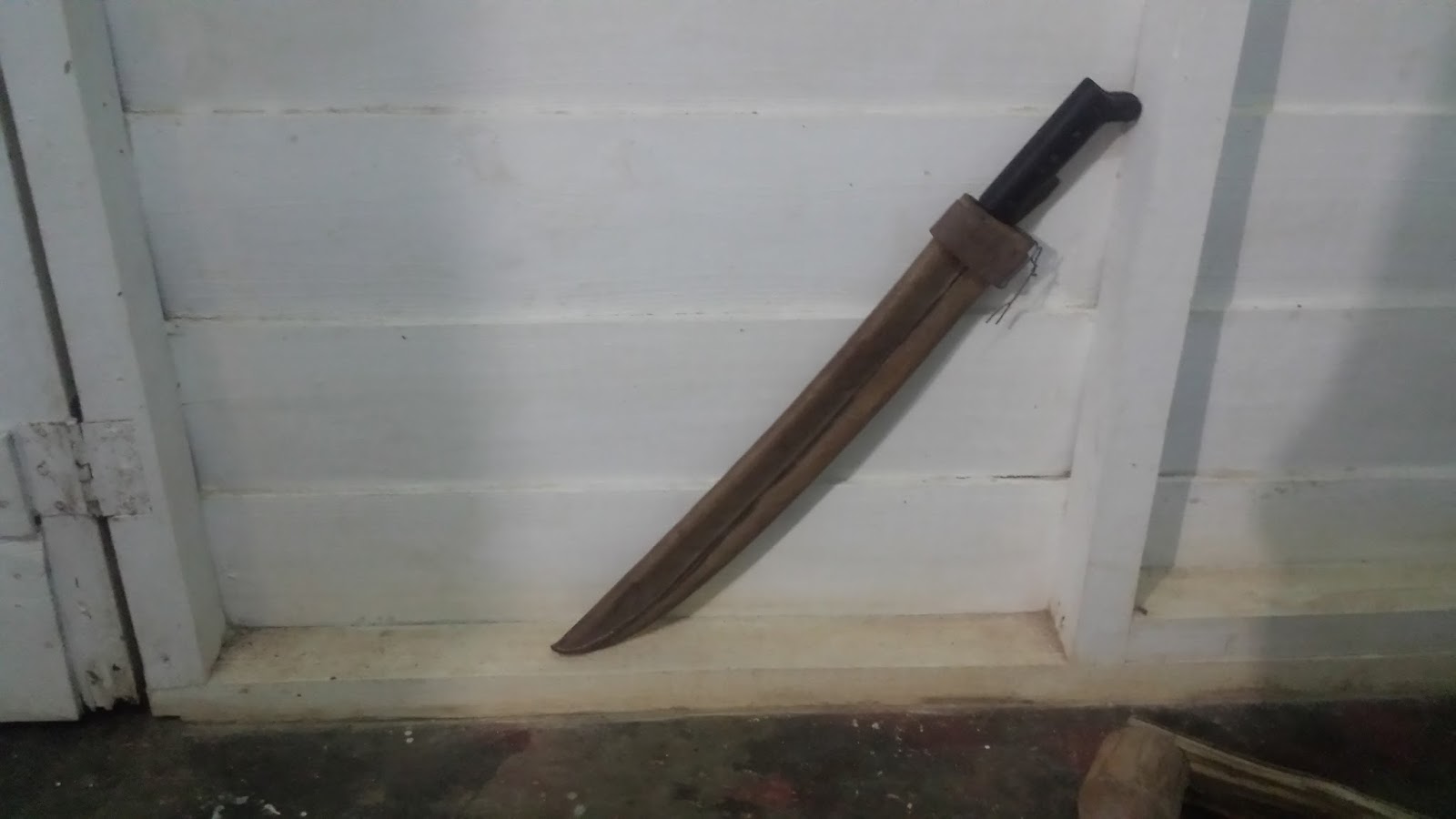
In other Spanish speaking countries "vaina" refers to a sheath. This comes from the Roman Latin "wagina" which referred both to what you put a sword in and the female reproductive organ. My host mother learned her religion from American missionaries and perhaps along with the theology she absorbed some of our discomfort. Non-evangelical Dominicans call the thing I stick my machete in a paqueta ("packet") and call just about everything else a vaina. The word features in the title of some movies.

"¡Qué vaina!"

So what does swearing tell me about DR culture? Coño if I know!

I suppose, if anything, the little sense of what I have made of all of this only reinforces my key perception of campo culture: people are very casual here. Campesinos wear flip flops into city hall and will answer the door in only a towel. In Dominican cities where they produce TV shows and have a professional culture similar to ours people dress for success and use double standards but here in the campo people say what they mean without shame and drive bulls down the streets with whips and blunt words.